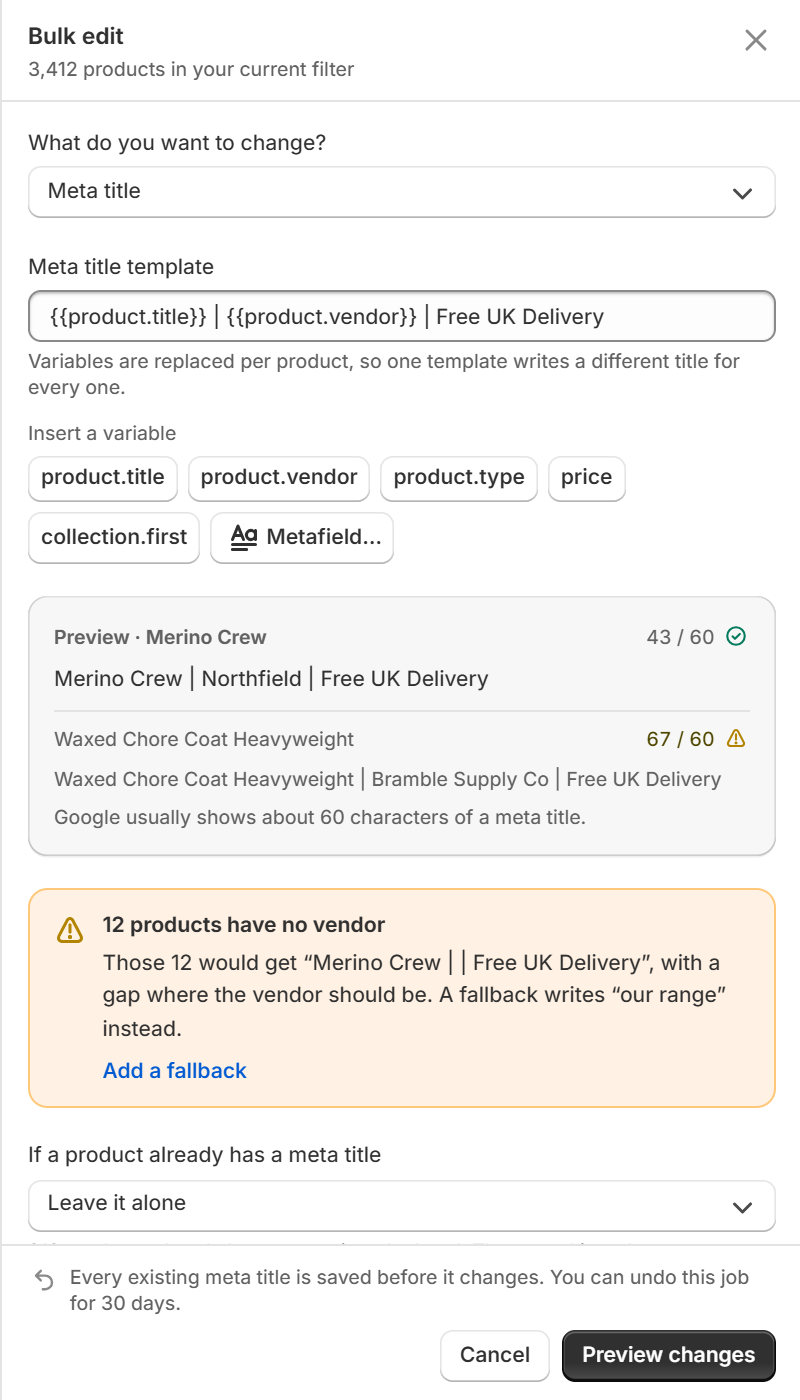
Find-and-replace writes the same thing everywhere, which is the problem it was meant to solve. A template resolves per product: {{product.title}} | {{product.vendor}} | Free UK Delivery writes a correct, different title for every product in the filter.

Shopify falls back to the product title when a meta title is empty, and leaves meta descriptions blank altogether. Every SEO audit flags it; nobody fixes it, because fixing it by hand means writing three thousand different sentences.
Variables are how one rule produces three thousand correct ones — and why the fifty you wrote by hand are left exactly as they are unless you say otherwise.
product.title · product.vendor · product.type · product.handle · price · compare_at_price · collection.first · variant.count · option.Size · any metafield
| truncate: 40 · | upcase · | round · | default: "our range" — the fallback that stops a missing vendor from writing “Merino Crew | | Free UK Delivery”.
Not unless you ask it to. “Leave it alone” is the default for products that already have a value, and the preview counts how many that is.
Yes. Every existing value is snapshotted before it is replaced, and the job is undoable for 30 days to 12 months depending on your plan.
Yes — collections, pages and blog posts have the same SEO fields, and the same templates apply to them on Growth and above.
No. The syntax looks similar deliberately, but these are variables resolved by BulkGauge at preview time against your own product data.